Among the puzzles of the apparitions in Beauraign is the contrast between the simplicity of what the mother of Jesus reportedly said to the children, none of whom were particularly pious, and the social-political complexity of the surrounding area. Lourdes and Fatima, both located in areas of relative peace, were sites for miracles, sacrifice, healing, proclamation and prophecy. But Beauraing, a peaceful, bucolic village, resided in the eye of storms in the early to mid-20th century, and appears more a place for sinners and the mundane.
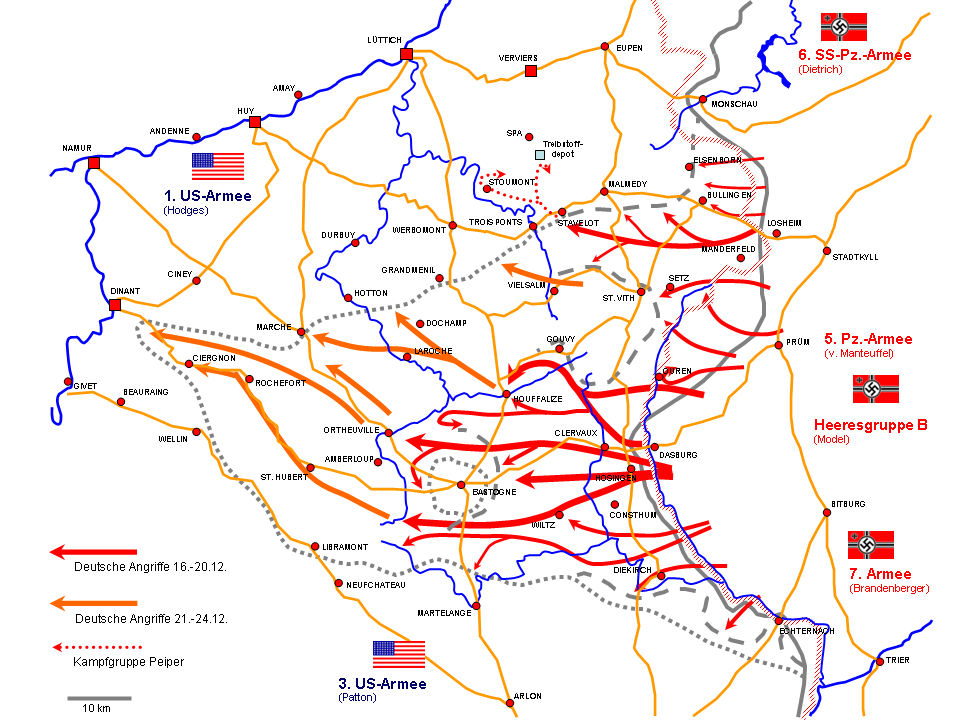
The village rests near the border of France surrounded by some of the most bloodly battlefields of World War 1, Flanders to the northwest, Verdun to the southeast. The apparitions took place from November 29, 1932 through January 3, 1933, three weeks before Hitler became Chancellor of Germany. In May of 1940 the German blitzkrieg would overrun this area and the rest of Belgium. After the invasion at Normandy, allied armies would push the Germans back to the edge of the German border in 1944. Then in December 1944, directly to the east, the Battle of the Bulge would be fought during the time of the 12th anniversary of the apparitions. The city of Bastogne, where the 101st Airborne made their final stand, was only 30 miles or so away, and the push of the German panzers, the bulge in the line of the allied armies, would stop just a couple of miles outside the village on Christmas Day in 1944.
Below is a map of the troop and tank movements during the battle. Beauraing can be found on the far left of the map in the lower corner:
 Songs for Joe